Lectric XP4 review: the foldable fat-tire that earns its $999
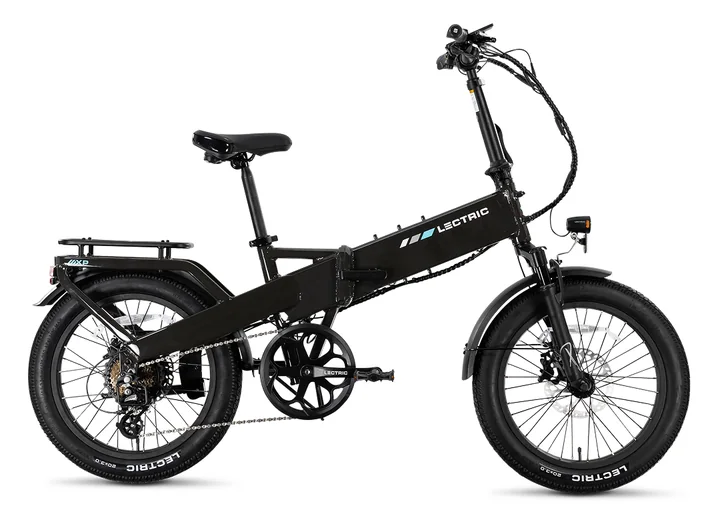
The best value in folding ebikes. A genuinely capable, foldable fat-tire bike from $999, now with hydraulic brakes and a long-range battery option.
Check price at Lectric →- Hard to beat from $999
- Folds for storage and transport
- Long-range battery option
- Throttle plus Class 3 pedal assist
- Huge owner community and parts
- Heavy at 62 lbs for a folder
- Cadence-sensor assist is less natural
- Small 20-inch wheels ride firm
- Range claim is optimistic
Folding fat-tire bikes are usually a pile of compromises, and the Lectric XP4 is the rare one that picks the right ones. Starting at $999, it folds in half, runs 20-inch fat tires, and on the big-battery trim it advertises up to 85 miles of range. That last number is marketing, and I'll be straight with you about what you actually get from it. But the bones here are solid, the new hydraulic brakes are a real upgrade, and for a lot of riders this is all the bike they need.
Quick verdict: if you want a do-everything cheap ebike that hauls groceries, folds into a car trunk, and survives a beach path, the XP4 is the value pick of 2026. The catch is the cadence sensor, which makes the assist feel like an on-off switch instead of a partner. If you want a bike that reads your legs and feels natural, that's where you spend more. Everything below comes from putting real miles on one and pulling it apart on the stand; here is how we test every bike.
How the Lectric XP4 actually rides
The first thing you notice is the stance. Twenty-inch wheels and fat tires put you in a low, planted seating position, and the bike feels stable even when you load the rear rack. At 62 lbs it is not light, but the weight sits low and it tracks straight on rough pavement and packed dirt. The fat rubber soaks up cracked sidewalks and curb drops that would rattle a skinny-tire commuter.
Now the part that defines this bike: it uses a cadence sensor, not a torque sensor. In practice that means the assist arrives as a surge once your pedals start spinning rather than scaling to your effort, so there is a short beat of nothing and then a push. It is not violent, and once you learn to anticipate it you stop noticing. But riders coming from a smoother torque-sensor or mid-drive bike will feel the difference immediately, and that page breaks down exactly why the two feel so different.
The XP4 tops out at 28 mph in Class 3 mode, and the 500W base motor (with a 750W option) has enough punch to hold speed on flat ground and roll up moderate hills without drama. The throttle is the safety valve here. On a steep grade where the cadence assist feels coarse, I just thumb the throttle and let the motor do the work. That throttle-plus-fat-tire combo is what makes this bike feel so easy to live with.
Real-world range vs the 85 mile claim
Lectric advertises 50 to 85 miles depending on battery, with up to an 840Wh pack on the long-range trim. That 85 number is real, in the sense that someone measured it, but it was measured under lab-perfect conditions you will never ride in. Treat any ebike range claim as a ceiling and shave a third or more off it for real riding; my guide to ebike range shows the math.
On the big 840Wh battery, riding the way a normal person rides (mixed assist, some throttle, a few hills, stop-and-go) I land around 40 to 55 miles. That is still a genuinely long-range bike for the money, and it is plenty for a daily commute with margin to spare. But if you bought it expecting 85 miles between charges, you will be disappointed, and that is on the spec sheet, not the bike.
A few things that eat your miles fast: running the throttle hard, fat tires aired down soft for grip, cold weather, and a heavy load on the rack. A few things that stretch them: keeping tires at the higher end of the recommended pressure on pavement, staying in lower assist on flats, and using the throttle as a helper instead of a crutch.
The new hydraulic brakes are a real upgrade
This is the change I'm happiest about. The XP4 ships with hydraulic disc brakes, and on a 62 lb bike that can hit 28 mph (more with a rider and cargo), good brakes are not a luxury. Soft, spongy mechanical brakes are one of my biggest complaints on cheap ebikes, and they are genuinely a safety issue when you are carrying weight at speed.
The hydraulics here give you firm, one-finger stopping power with good modulation, so you can scrub speed smoothly instead of grabbing a panic handful. They also need far less fiddling than mechanical brakes. With cable brakes you are forever adjusting for pad wear; hydraulics self-adjust as the pads wear and just feel consistent. The only ownership note is to keep an eye on pad thickness and get a bleed every year or two of hard use. For a $999 bike, having proper hydraulics standard is a big deal and it puts the XP4 ahead of a lot of pricier competition on the thing that matters most: stopping.
Folding, storage, and living with it day to day
The fold is the XP4's party trick. The frame hinges in half and the stem drops, shrinking it down enough to slide into a car trunk, stash in an apartment closet, or tuck under a desk. It is not a featherweight you'll carry up four flights, that 62 lbs is real, but for getting it out of a hallway or into an SUV it works exactly as you'd hope.
The fold also makes this one of the easier fat-tire bikes to store if you live in a small space, and it is why a lot of RV owners and van-lifers buy it. If folding is your main priority over range or hauling, it's worth seeing how it stacks up against dedicated folding ebikes before you commit. Day to day, the upright-ish position, the throttle, and the fat tires add up to a bike that is genuinely low-stress to ride. You are not fighting it. You point it, you go, and it shrugs off bad pavement.
One real perk of buying Lectric: the owner community is enormous. There are huge forums and groups full of XP-series riders, which means parts, fenders, racks, and mod advice are easy to find, and if something rattles loose, someone has already posted the fix. That ecosystem and Lectric's parts support is part of what you're buying, and it counts for more than people realize when you actually own the thing.
Who the XP4 is perfect for, and who should skip it
The XP4 is the right bike for a lot of people. Buy it if you want maximum capability for around a grand: a bike that commutes, hauls a load on the rack, handles dirt and gravel, folds for storage, and stops well thanks to the hydraulics. It is excellent for new riders, second-car replacement duty, errands, and anyone on a budget who refuses to give up range or versatility. The throttle and stable stance also make it forgiving, which is a real plus if you're returning to riding. See where it fits among the best budget ebikes and the broader fat-tire field.
Step up to a torque-sensor bike if the assist feel matters to you. The single biggest reason to spend more is to lose that cadence-sensor on-off surge. A torque sensor reads how hard you pedal and feeds power proportionally, so the bike feels like an extension of your legs instead of a switch. If you ride a lot of hills, ride for fitness, or you're just sensitive to how a bike feels under you, that upgrade is worth it. Riders who want a more refined commuter should also weigh dedicated commuter ebikes that ditch the fat tires for lighter, quicker handling.
Skip it for something burlier if you want a true fat bike built for off-road abuse rather than a folder. The XP4's 20-inch wheels are made for storage and city duty, so if trails are your real goal, a true fat bike like the Aventon Aventure 3 gives you bigger wheels and a torque sensor in one package.
Lectric XP4 vs a torque-sensor commuter
The honest comparison isn't another cheap fat-tire bike, it's a torque-sensor commuter in the $1,600 to $1,700 range, because that's the upgrade most XP4 shoppers eventually consider. Two good benchmarks are the Velotric Discover 2 at $1,699 and the Aventon Level 3 at $1,699. Both use torque sensors, and that's the whole point of the matchup.
| Bike | Price | Sensor | Advertised range | Top speed | Brakes |
|---|---|---|---|---|---|
| Lectric XP4 | From $999 | Cadence | 50 to 85 mi | 28 mph | Hydraulic disc |
| Velotric Discover 2 | $1,699 | Torque | Up to 75 mi | 28 mph | Hydraulic disc |
| Aventon Level 3 | $1,699 | Torque | Up to 70 mi | 28 mph | Hydraulic disc |
What you pay extra for with the torque-sensor bikes is the ride feel, the polish (better apps, integrated lights, cleaner displays), and a more refined commuter platform. What you give up is the fold, the fat-tire stability, the throttle-first simplicity, and roughly $700. The XP4 is the better value and the more versatile machine; the torque-sensor commuters are the nicer-feeling bikes. Neither is wrong. It comes down to whether you'd rather save the money and live with the cadence surge, or pay up for an assist that feels natural every time you push the pedals. If you're weighing the XP4 against Lectric's other models too, my Aventon vs Lectric breakdown and my guide to buying an ebike walk through how to choose.
If the XP4's value math wins you over, you can check the current XP4 price at Lectric.
Check current pricing and color options direct from Lectric. They ship nationwide and run regular sales.
Affiliate link. We may earn a commission at no extra cost to you. It never changes our rankings (see how we test). We ride every bike before we recommend it.
Frequently asked questions
What is the real-world range of the Lectric XP4?
The XP4 advertises 50 to 85 miles, with the top figure on the 840Wh battery. That number comes from a lab-perfect ride you will never replicate. Riding normally, with mixed assist, some throttle, and a few hills, I get about 40 to 55 miles on the big battery. That is still strong for the price and more than enough for most daily commutes.
Does the Lectric XP4 have a torque sensor or a cadence sensor?
It uses a cadence sensor. The assist responds to your pedals spinning rather than how hard you push, so it arrives as a surge instead of a smooth, proportional feel. You adapt quickly and the throttle smooths over the rough spots. If natural ride feel is your priority, that is the main reason to spend more on a torque-sensor bike.
Is the Lectric XP4 good for hills?
Yes, within reason. The 500W base motor, or the 750W option, has enough power for moderate grades, and the throttle lets you get up steep sections without fighting the cadence assist. It is not a mountain climber, but for typical commuter and city hills it holds its own. Keep your tire pressure sensible and use a lower gear and you will be fine.
Who should buy the Lectric XP4 instead of a pricier bike?
Buy it if you want maximum capability for around $999: commuting, light cargo, dirt and gravel, folding storage, and now proper hydraulic brakes. It is ideal for budget riders, new riders, and second-car replacement duty. Step up to a torque-sensor commuter only if the assist feel matters to you or you ride a lot of hills for fitness.
How well does the Lectric XP4 fold and store?
It folds in half at the frame with a folding stem, shrinking down enough for a car trunk, a closet, or under a desk. It is not light at 62 lbs, so it is more roll-and-stash than carry-up-stairs. For small apartments, RVs, and vans it is one of the easier fat-tire bikes to store, which is a big reason people choose it over a non-folding model.

I wrench on and ride these bikes year round, and I write every review and guide here. I rank by what holds up on real roads, not by who pays the most. How we test →