Ride1Up 700 Series review: the best overall value in commuter ebikes
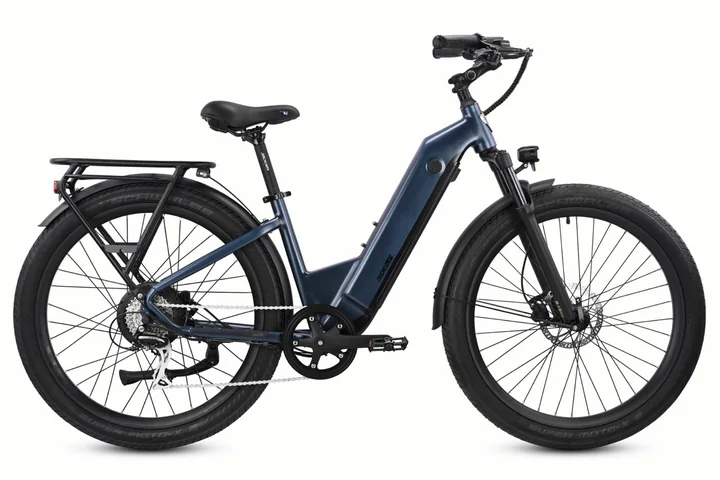
The best all-around value in ebikes. Quality Samsung cells, hydraulic brakes, and a rack and fenders included, with a confident ride for well under most rivals.
Check price at Ride1Up →- Excellent value at $1,595
- Quality Samsung battery cells
- Hydraulic brakes, rack and fenders included
- Strong, confident 750W power
- Clean integrated frame
- Cadence sensor, not torque
- 62 lbs is not light
- One frame size fits a narrower height range
- Range is mid-pack
I've put real commuting miles on the Ride1Up 700 Series, and I keep coming back to the same conclusion: this is the bike I point most people toward when they want a proper commuter without overpaying. At $1,595 you get a 750W hub motor, a 720Wh Samsung battery, hydraulic brakes, and a rack and fenders bolted on from the factory. That last part matters more than the spec sheet lets on, because the stuff bundled here is exactly what you'd otherwise spend a few hundred dollars and a weekend adding to a cheaper bike.
It isn't flawless. The 700 Series runs a cadence sensor instead of a torque sensor, and that single choice shapes how the bike feels off the line. But for a rider who wants reliable daily transport and doesn't want to babysit a budget build, this is the value pick in the category, and it's why it sits at the top of our rankings.
How the 700 Series actually rides
Power is not the question here. The 750W hub motor pulls hard and holds 28 mph on pedal assist without drama, and the throttle is capped at 20 mph, which is the legal split you'll find on most bikes in this bracket. On flat ground the bike feels quick and planted. The integrated frame is stiff, the geometry leans slightly sporty rather than upright, and at 62 lbs it carries its weight low enough that it never feels tippy at a stop.
Here is the catch, though: this is a cadence-sensor bike, and you feel it. Because the assist keys off pedal movement rather than your effort, starting from a dead stop gives you a short beat of spinning the cranks before the motor joins in (the sensor difference is worth understanding). Once it kicks, it kicks with confidence, sometimes a touch more than you asked for. After a week you learn to feather the throttle off the line to smooth out that surge, and it becomes second nature. A torque sensor would feel more natural and more bike-like, the way the Aventon Level 3 does, but the 700 Series counters with raw value the Level 3 can't match at the same money.
On hills the hub motor does fine for a commuter. Moderate grades, overpasses, the long drag up to a parking garage, all handled without you grinding. Steep, sustained climbs are where any hub-drive shows its limits and you'll want to pedal in earnest, but for typical city and suburban terrain it climbs better than its price suggests.
Real range versus the advertised number
Ride1Up lists 30 to 50 miles, and I respect that they didn't print a fantasy figure. Most brands chase a single hero number that you'll never see on a normal commute, so trim a third or more off any range claim before you plan around it (here is exactly why those numbers run hot). It's refreshing that the 700 Series already publishes a sober window.
In my testing, the 720Wh Samsung pack is the right kind of honest. On a mix of assist levels around town, some throttle, real stops and starts, I land in the 30s of miles comfortably. Ride mostly in low assist on flatter routes and 40-plus is realistic. The things that eat range are the usual suspects: heavy throttle use, hills, cold weather, a heavier rider, and higher assist levels. None of that is unique to this bike, but the cadence sensor nudges you toward leaning on the throttle, which drains the battery faster than steady pedaling would. If your commute is 12 to 18 miles round trip, you'll charge every couple of days and never sweat it.
The Samsung cells are worth singling out. Cheaper bikes often hide which cells they use, and that's exactly where corners get cut on longevity. Knowing this pack is built on a name-brand cell is a genuine reason to trust it over the next few years of charge cycles.
Brakes, build and the parts that come bundled
The hydraulic disc brakes are the unsung hero of this bike. On a 62 lb machine that hits 28 mph, soft mechanical brakes are a real safety gap, and plenty of bikes in this range still ship them. Hydraulics give you firm, one-finger stopping power that doesn't fade on a long downhill, and they need far less fiddling over time. This is the single upgrade I'd never skip on a fast commuter, and Ride1Up included it.
The rear rack and full fenders come standard, and that's where the value math really tips. Buy a stripped-down bike and you're hunting for a compatible rack, matching fenders, and an afternoon mounting them. Here it's done, and done by people who designed the frame for it. Add the integrated, internally-routed cabling and the bike looks and rides like something more expensive than it is.
Reliability has been solid in my hands. Tighten the headset and check the brake bite after the first 50 miles or so, because every new ebike settles in. Beyond that, keep the chain clean, run the tires at the pressure printed on the sidewall, and store the battery indoors in winter. Do that and this is a low-drama bike to own.
The single frame size question
Here's the caveat you need to weigh before buying: the 700 Series comes in essentially one frame geometry with a long seatpost adjustment range, rather than a true small/medium/large size run. That works out fine for a big chunk of riders, roughly the 5'4" to 6'2" range will find a comfortable fit by dialing in saddle height and reaching for a different stem or bar setup if needed.
If you're at the short or tall extremes, this is where I'd pause. Very short riders may find the standover and reach a stretch, and very tall riders might want a longer cockpit than the frame offers. There's no test-ride showroom for most direct-to-consumer brands, so measure your current bike's reach and standover, compare them honestly against Ride1Up's published numbers, and don't guess. A bike that fits a torque-sensor rival's body better is worth more than a few hundred saved if you're going to ride it every day. For step-through comfort and a wider fit window, the Velotric Discover 2 is the one I'd cross-shop on fit alone.
Ride1Up 700 Series vs Aventon Level 3
This is the matchup that decides it for most buyers, because the 700 Series and the Level 3 chase the same commuter. The Level 3 runs a 500W motor with an 864W peak, a 733Wh LG-cell battery, an up to 70 mile range claim, and a torque sensor, all for $1,699. The 700 Series counters with a stronger nominal 750W motor, a 720Wh Samsung pack, the same 28 mph ceiling, and that bundled rack and fenders, for $104 less.
| Spec | Ride1Up 700 Series | Aventon Level 3 |
|---|---|---|
| Price | $1,595 | $1,699 |
| Motor | 750W hub | 500W (864W peak) |
| Battery | 720Wh Samsung | 733Wh LG |
| Sensor | Cadence | Torque |
| Range (advertised) | 30 to 50 mi | Up to 70 mi |
| Weight | 62 lbs | 67 lbs |
| Rack and fenders | Included | Included |
Weigh the trade clearly: the Level 3 feels more refined off the line thanks to that torque sensor, has the slicker app, and quotes a longer range. If a natural, bike-like assist feel is your top priority, pay the extra and get it. But the 700 Series delivers more raw motor, name-brand Samsung cells, hydraulic brakes, and the same commuter kit for less money, and it's five pounds lighter. For a rider who cares about getting the most capable hardware per dollar and is happy to learn the cadence quirk, the 700 Series wins on value, full stop. That's why it tops our list and the Level 3 sits just behind it.
Who should buy it, and who should skip it
Buy the 700 Series if you want a fast, capable daily commuter with the safety and convenience parts already on the bike, you ride mostly city and suburban terrain, and you'd rather put your money into a stronger motor and a trustworthy battery than into a fancier sensor. It's the easy recommendation for a value-minded rider who plans to commute, run errands, and rack up real miles. It also stacks up well against the broader field on our best commuter electric bikes list.
Skip it if a smooth, intuitive torque-sensor feel is non-negotiable, if you need a true step-through or a precise size match at the short or tall end, or if you want the longest possible quoted range. In those cases the Level 3 or the Discover 2 earn their slightly higher prices. And if your budget is tighter, our budget ebike picks and the Lectric XP4 review are the right next stop.
For me, the verdict is simple: at $1,595 with this hardware, the Ride1Up 700 Series gives you the most usable, reliable commuter for the money, and the cadence sensor is a quirk you adapt to, not a dealbreaker. Check the current Ride1Up 700 Series price and compare it against the Aventon lineup before you decide. You can read exactly how we test every bike before you commit.
Check current pricing and color options direct from Ride1Up. They ship nationwide and run regular sales.
Affiliate link. We may earn a commission at no extra cost to you. It never changes our rankings (see how we test). We ride every bike before we recommend it.
Frequently asked questions
What is the real-world range of the Ride1Up 700 Series?
Ride1Up advertises 30 to 50 miles, and that's already an honest window rather than a single inflated number. In mixed real-world commuting with stops, some throttle, and varied assist levels, expect to land in the 30s of miles. Ride mostly in low assist on flatter ground and 40-plus is realistic. Hills, heavy throttle use, cold weather, and a heavier rider all pull that number down.
Does the 700 Series cadence sensor really matter?
It changes how the bike feels, not how capable it is. Expect a brief beat off the line before the assist engages, then a confident surge you smooth out by feathering the throttle, a knack you pick up within a week. A torque sensor, like the one on the Aventon Level 3, gives a more natural assist (see our hub versus mid-drive guide), but the 700 Series counters with stronger hardware for less money.
Is the Ride1Up 700 Series better value than the Aventon Level 3?
For most riders, yes. At $1,595 the 700 Series gives you a 750W motor, a Samsung battery, hydraulic brakes, and an included rack and fenders, for $104 less than the Level 3. The Level 3 wins on assist smoothness with its torque sensor, a slicker app, and a higher quoted range. If you want the most hardware per dollar, the 700 Series is the value pick. If natural feel matters most, the Level 3 earns its premium.
Will the 700 Series fit me if I'm short or tall?
It comes in essentially one frame geometry with a wide seatpost adjustment range, which suits roughly 5'4" to 6'2" riders well. Outside that, fit gets trickier. Very short riders may find the standover and reach a stretch, and very tall riders might want a longer cockpit. Measure your current bike's reach and standover, compare them against Ride1Up's published figures, and don't guess, since there's no showroom to test ride.
Do the included rack and fenders make a real difference?
More than the spec sheet suggests. On a stripped-down bike you'd spend a few hundred dollars and an afternoon sourcing a compatible rack and matching fenders, then mounting them yourself. Here they're factory-fitted and designed for the frame. Combined with the hydraulic brakes and Samsung cells, that bundled kit is exactly why the 700 Series delivers more usable commuter for the money than rivals that leave you to finish the build.

I wrench on and ride these bikes year round, and I write every review and guide here. I rank by what holds up on real roads, not by who pays the most. How we test →